Earth, planetary and environmental sciences (geosciences)
Training
OUR TRAININGS
The range of initial training courses in earth and environmental sciences trains specialists capable of responding to major environmental challenges: adapting to climate change, managing natural resources, preventing natural hazards, combating pollution and managing territories sustainably.
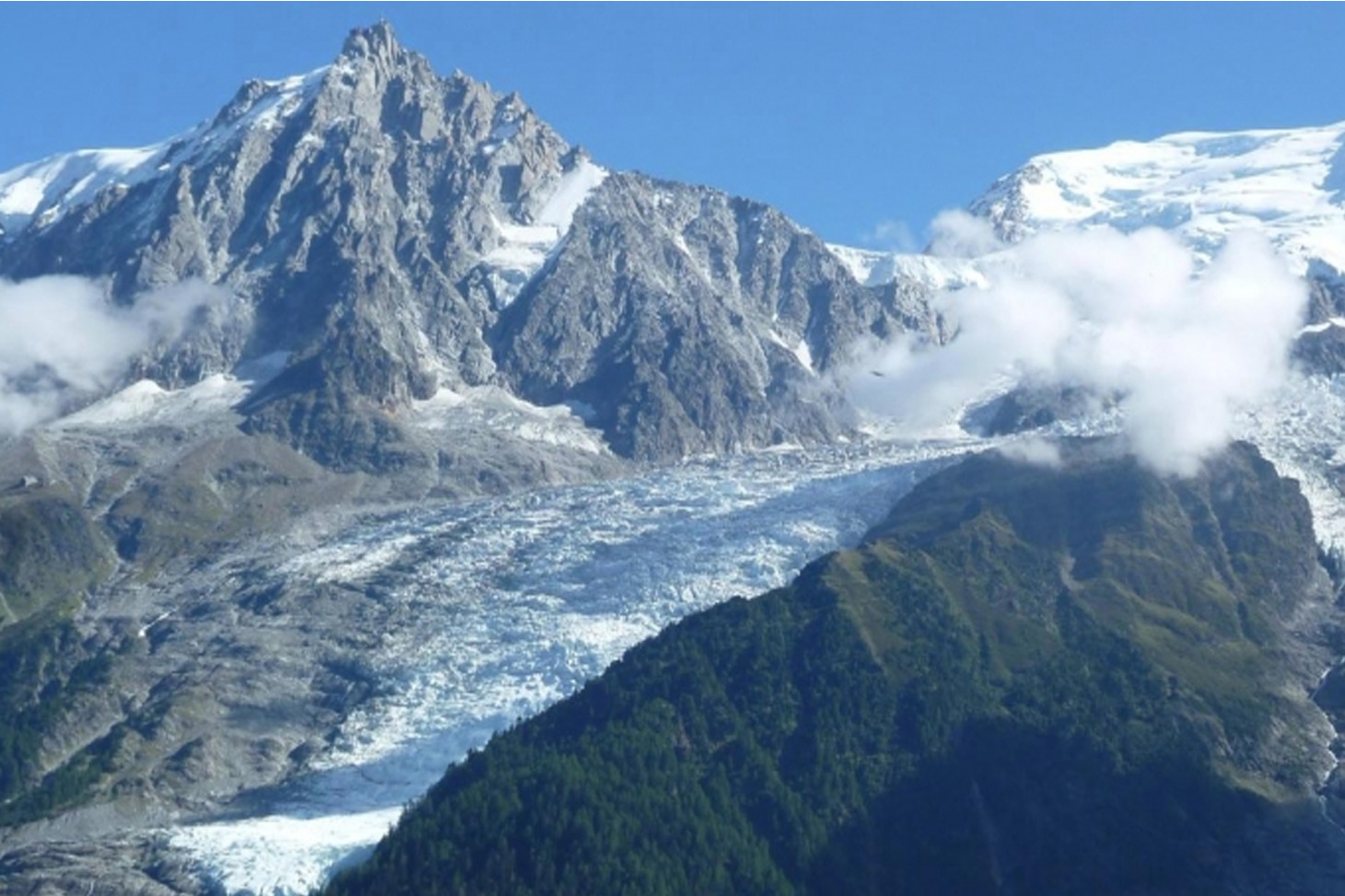
The program combines scientific fundamentals, field placements and innovative approaches (theme schools, small-group projects). It offers an international outlook and an exceptional geographical setting in the heart of the Alps. It also draws on the expertise of the laboratories of the Grenoble Observatory for the Sciences of the Universe (OSUG) and the UGA, ranked 16th worldwide and 3rd nationally in Earth Sciences (Shanghai rankings).
Graduates can go on to a Master's degree for a variety of careers, or enter the workforce directly through specialized professional licenses.
LICENCE
The Bachelor's degree in Earth Sciences is based on a good command of mathematics, physics and mechanics. It is supplemented by basic teaching in the discipline (geology, geophysics, fieldwork) to give students the necessary foundations for the study of Earth Sciences using quantitative tools.
Please note: The first 2 years of the degree are taught at the DLST (Département Licence Sciences et Technologies) in Grenoble.
This specialization groups together three courses in environmental and natural resource protection and management, two of which are taught at UFR PhITEM: "Design and monitoring of hydraulic systems" and "Prospecting and protection of underground resources".
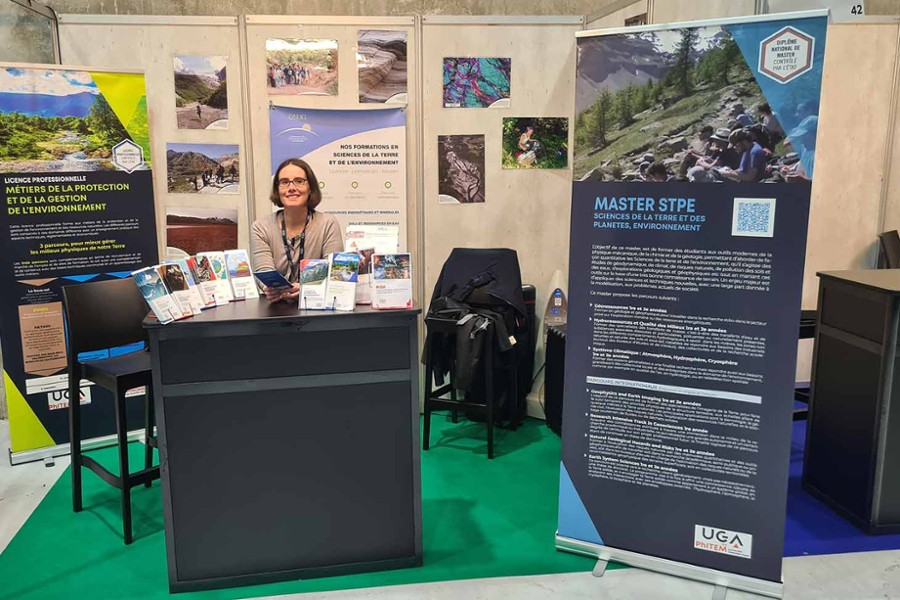
The Earth and Planetary Sciences, Environment Master's degree trains students in the modern tools of physics-mechanics, chemistry and geology, enabling them to take a quantitative approach to the earth and environmental sciences, including studies of geodynamics, climate, natural hazards, soil and water pollution, geological and geophysical explorations, etc., while at the same time using these tools on the basis of in-depth field knowledge. A major challenge is to apply new sciences and techniques, with a strong emphasis on modeling, to current social problems.
To find out more about careers in earth and environmental sciences, go to OSUG website
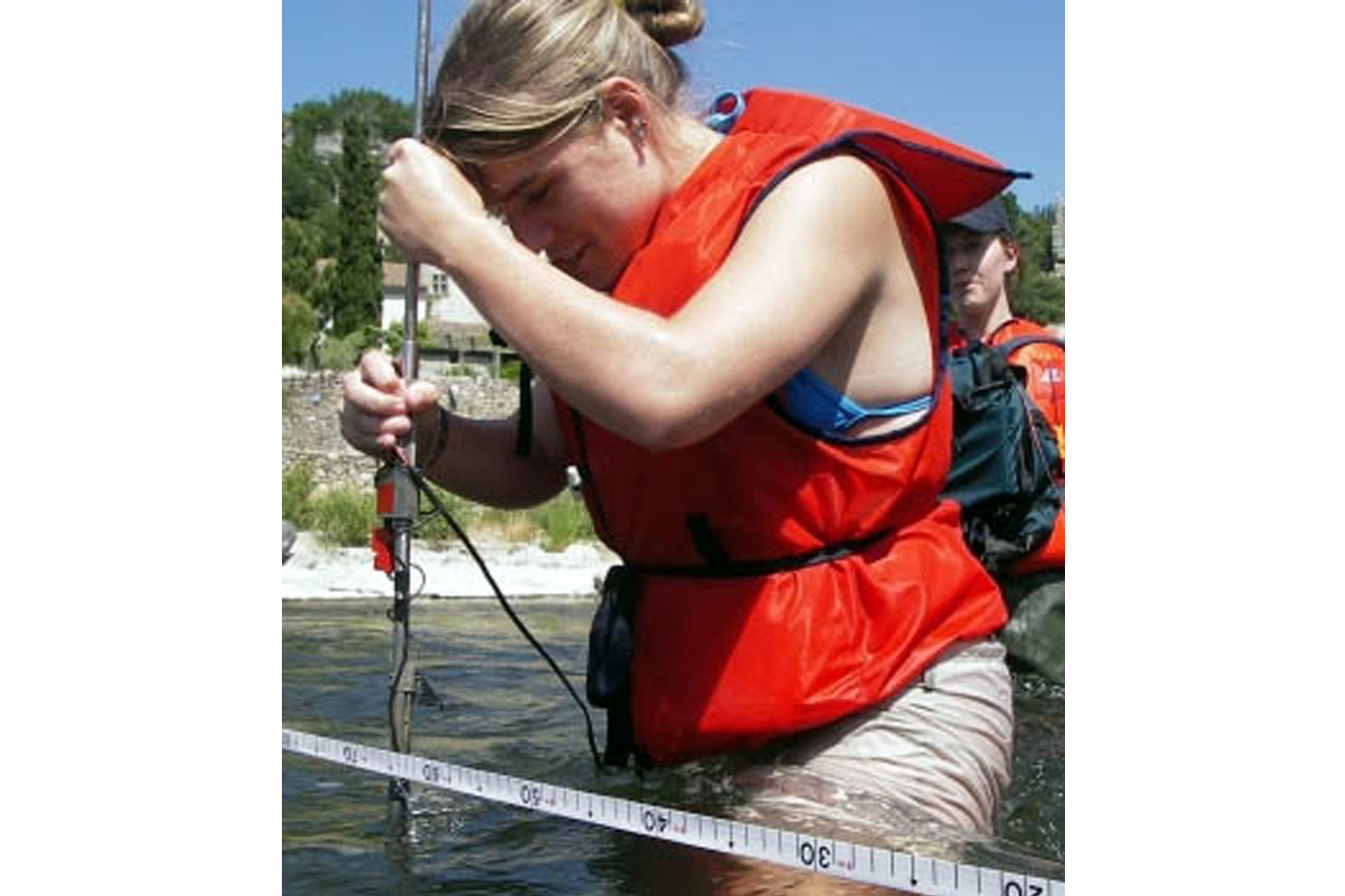
River gauging
Hydrology internship in M1 STE
Facts and figures
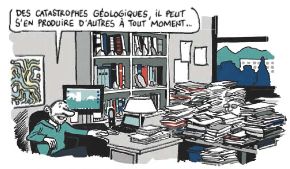
Gravity instability
Another way of telling the story of our earth science research and training. Download the comic (produced by Jean-Yves Duhoo for Spirou Magazine, n°3906, February 20, 2013)
Share linkCopyCopyClose modal windowShare this page URLI recommend this page:Available at this address :The page will then be accessible from your "My favorites" menu.Stop videoPlay videoMute soundPlay soundChat: Got a question?Chatbot Robo FabricaMatomo visitor statisticsX (formerly Twitter)