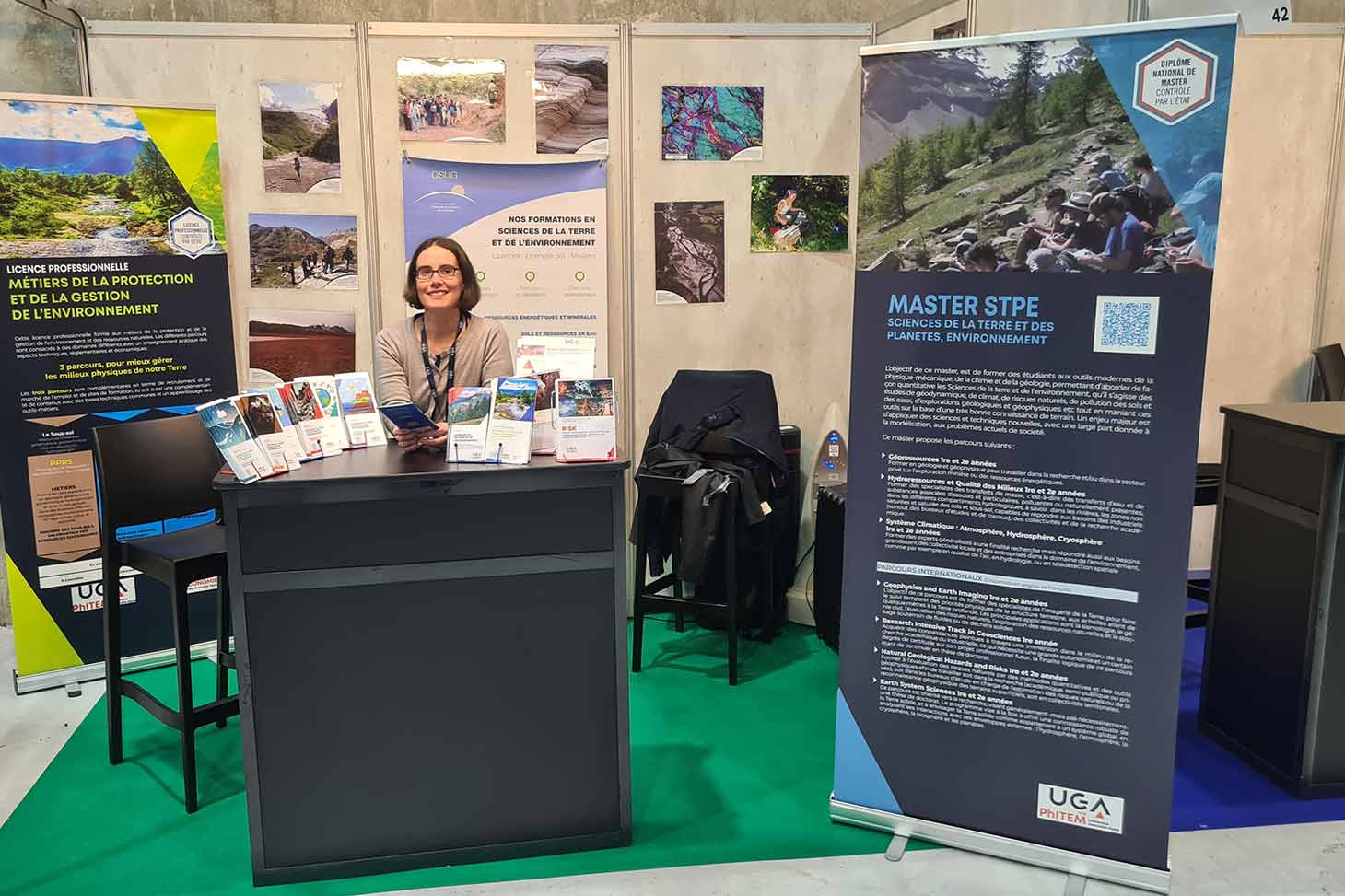
We offer training courses, from 3rd-year bachelor's to master's degrees, in the following disciplines: EEA (Electronics, Electrical Energy, Automation), Civil Engineering, Mechanics, Physics (including nanosciences and nuclear engineering) and Earth and Environmental Sciences. We closely combine our scientific and professional training to ensure that our graduates are quickly integrated into the world of work.
GOOD TO KNOW : Students in the first two years of the bachelor's degree take their courses and other teaching activities at the Département Licence Sciences et Technologies
(DLST) in Grenoble and the
DSDA (Département Sciences Drôme-Ardèche) in Valence.
Internships
Depending on the direction chosen in the Master's program, internships can be carried out in the laboratories or in one of the many companies on the Grenoble site, in France or abroad.
Work-linked training
Several of our courses are offered on a Work-Study basis, combining university training with a work assignment in a company, thus promoting the professional integration of trainees.
Orientation
Numerous bridges are offered at different levels: during the bachelor's degree, when transferring from the bachelor's to the master's degree, and under stricter conditions, during the master's degree. Our technology courses (electrical engineering, civil engineering and mechanical engineering) also attract a large number of students with a DUT, for whom they offer a highly attractive pathway to engineering-level employment.
Some of our Master's courses are associated with the
Graduate School@UGAwhich offers interdisciplinary training and academic excellence on defined themes, with access to academic scholarships.
Further studies
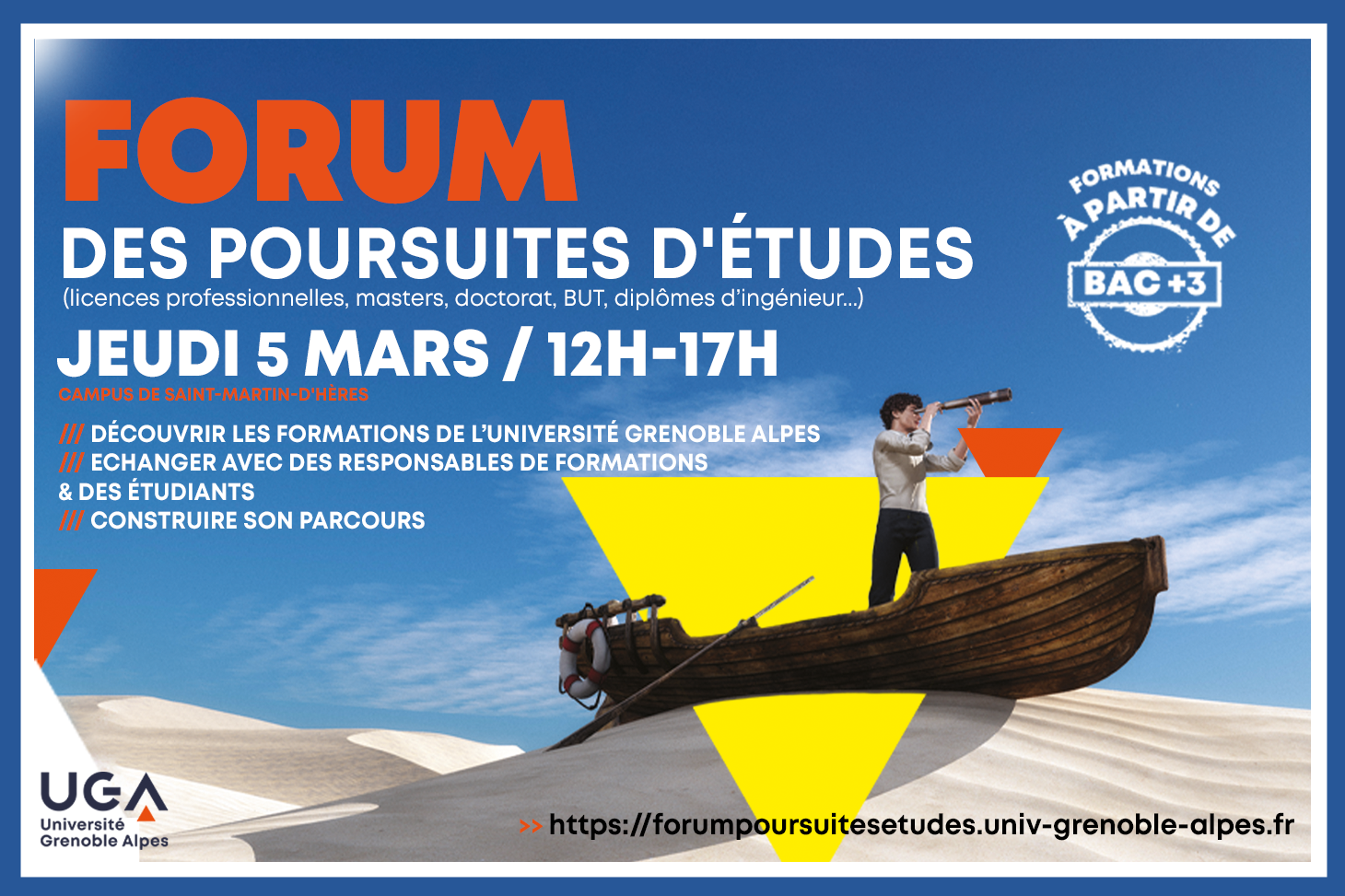
Bachelor's degree courses are generally designed to enable students to continue their studies at Master's level, while professional bachelor's degrees are designed to enable students to enter the workforce directly.
Some of our Master's programs are designed to enable students to continue their studies in a doctoral thesis, while others are more professionally oriented, with numerous external contributors from the socio-economic world. Some courses can combine both orientations.